Logistics customers have one question more than any other: "Where's my shipment?" If the only way to find out is to call or message your team, you're spending hours every day answering the same question, and your customers are still frustrated.
I'm Aldrian, an independent web developer in the Philippines. I build websites and web systems for logistics companies, couriers, trucking operators, freight forwarders and warehouses, from simple service sites to tracking systems and client dashboards.
Two different needs
Most logistics businesses need one or both of these.
A website that wins business
Clear service pages, coverage areas, fleet and capacity information, and a request-for-quote form that collects the details your team needs to price a job. This is what B2B clients and shippers look at when they're comparing providers.
A system that runs the business
Shipment tracking, booking forms, client accounts, driver updates and reports. This is a web app, and it saves your team time every day.
I can build either one, or both together.
What your logistics website should include
Services. Door-to-door delivery, same-day courier, trucking, freight forwarding, customs brokerage, warehousing, cold chain or last-mile delivery. Each service deserves a clear page.
Coverage. Which areas, routes and islands you serve, and typical lead times if you choose to share them.
Fleet and capacity. Truck types, sizes and capacity, so clients know you can handle their cargo.
Credentials. Permits, accreditations and insurance, presented accurately.
Quote requests. A form asking for origin, destination, cargo type, weight or volume, and pickup date, delivered straight to your sales team.
Shipment tracking for your customers
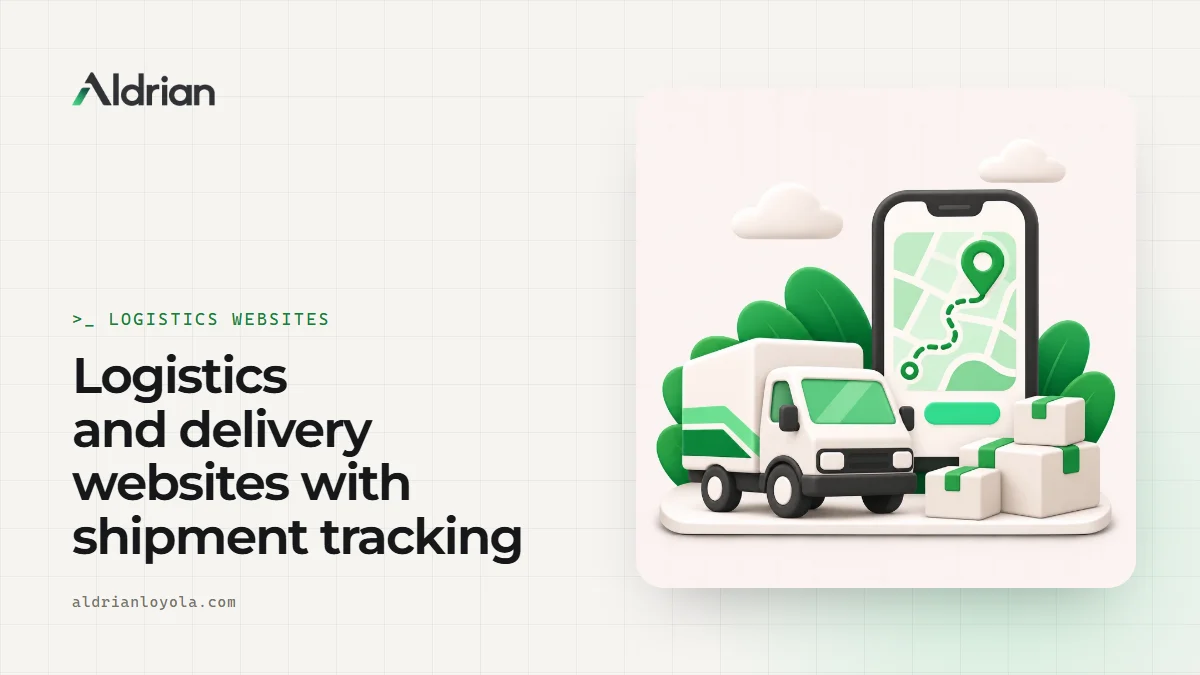
A tracking page where customers enter a tracking number and see the current status is one of the most useful features a logistics site can have. Depending on how you work today, it can be built in different ways:
- Simple status updates. Your staff update the shipment status in an admin panel and customers see it instantly.
- Driver updates. Drivers mark pickups and deliveries from their phones, with photos as proof of delivery.
- Integration. If you already use a dispatch or fleet system, I can connect to it through its API. More on my API integration page.
Customers can also get automatic updates by email or SMS when the status changes. See automated email and SMS notifications.
Client dashboards
For regular B2B clients, a client portal lets them:
- Book pickups without calling
- See all their shipments in one place
- Download waybills, invoices and proof of delivery
- Track performance over time
That kind of convenience keeps clients loyal.
Admin tools for your team
Behind the scenes, I can build tools that replace spreadsheets and group chats:
- Booking and dispatch boards
- Driver and vehicle assignment
- Status updates and delivery photos
- Customer and rate management
- Reports on volume, delivery times and problem shipments
Built to be reliable
Logistics systems get used all day, often on phones in the field. I build them to be:
- Fast on mobile data, so drivers and customers aren't waiting
- Secure, with proper logins, roles and permissions
- Reliable, with backups and monitoring
- Simple, with clear screens that new staff learn quickly
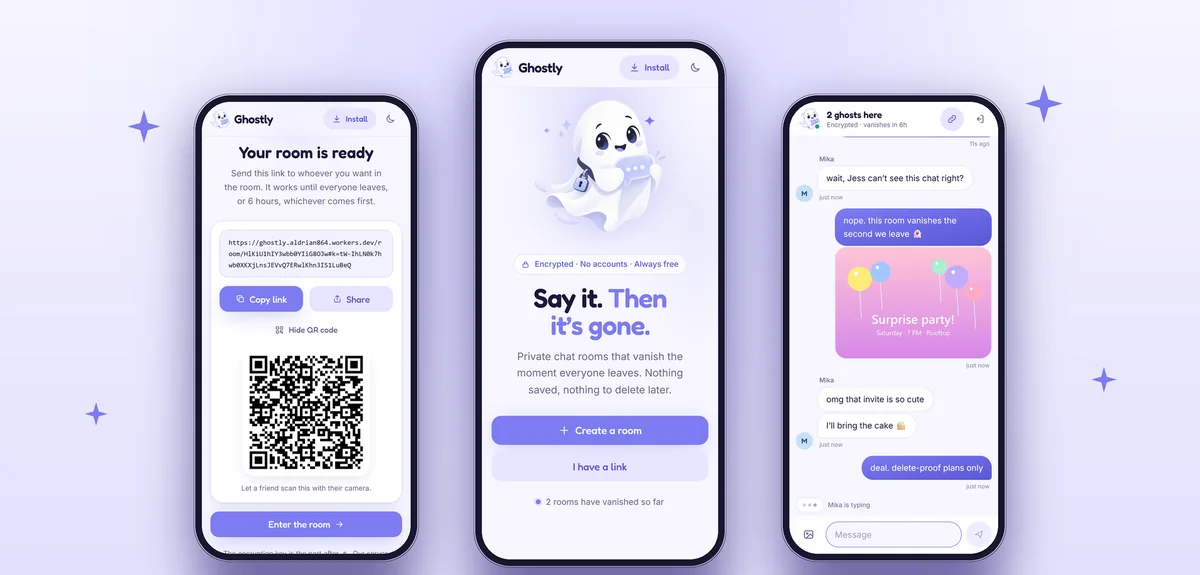
My Ghostly project, a real-time encrypted chat app, shows the kind of modern, fast stack I use for web apps that need live updates.
Start small, grow later
You don't have to build everything at once. Many logistics companies start with a strong website and a quote form, then add tracking, then client accounts. I'll help you plan a first version that solves your biggest problem, with room to grow.
Replacing the spreadsheet and group chat
Most logistics companies I talk to run on a mix of spreadsheets, group chats and phone calls. It works when you're small. As volume grows, things slip: a status that wasn't updated, a photo lost in a chat, a customer told the wrong thing.
A simple web system doesn't have to replace everything at once. Often the biggest win is one shared place where bookings, statuses and proof of delivery live together. Everyone, from dispatch to drivers to customer service, looks at the same information, and customers can check it themselves.
What it takes to get tracking right
Tracking only works if the data is updated. Before I build anything, I'll ask who updates each status today, when and how. Then I design the system around that reality, with as few steps as possible for the people in the field. A tracking page that nobody updates is worse than no tracking page at all, so making updates easy for drivers and staff is part of the job.
How we'd work
- We talk about your services, your clients and the problems you want to solve.
- We scope a clear first version.
- You get a quote with timeline and fixed price.
- I build in steps and share preview links.
- We test with real data and real users.
- We launch, and I train your team.
Let's make "where's my shipment?" easy to answer
Tell me about your logistics business. I'll reply with a plan and a fixed quote.