B2B buyers don't browse the way shoppers do. A purchasing officer, engineer or business owner is usually looking for something specific: a product that meets a spec, a supplier with enough capacity, the right certifications and a fast quote. If your website makes them dig through PDFs or message you just to find basic information, they'll contact a supplier whose website made it easy.
I'm Aldrian, an independent web developer in the Philippines. I build websites for suppliers, distributors, wholesalers, importers and manufacturers that work the way B2B buyers actually buy.
What B2B buyers look for
A product catalog they can search
Categories, filters and search by product name, model, size, material or application. Each product page with photos, specifications, available sizes or variants, packaging and minimum order quantities if you choose to show them.
Spec sheets and documents
Downloadable technical data sheets, safety data sheets, certificates and brochures, attached to the right product, not hidden in a single giant PDF.
Capacity and credentials
Production capacity, facilities, quality certifications, accreditations and the industries you serve. Buyers need to know you can deliver reliably.
A fast way to request a quote
A request-for-quote form on every product, with the product already attached. Buyers can add quantities, delivery location and notes. Your sales team gets everything needed to reply fast.
Features I can build
- Searchable product catalog with filters
- Product pages with specs, variants and downloads
- Request-for-quote cart, so buyers can request several products at once
- Dealer or distributor application forms
- Dealer locator with a map
- Industry and application pages
- Certifications and quality pages
- Private price lists or ordering for approved accounts
- Connection to your inventory system or ERP
- Multi-language pages for export markets
Catalog, quote or online store?
Not every B2B company should sell online. I'll help you choose the right model.
Catalog with quote requests. Best when prices depend on volume, customization or delivery. Buyers browse, then request a quote.
Trade accounts. Approved buyers log in to see their prices, reorder and track orders.
Full online store. Works well for standard products with fixed prices, including wholesale tiers. More on my e-commerce page.
Many companies use a mix: public catalog, quote requests for new buyers and logins for regular accounts.
Managing hundreds or thousands of products
Large catalogs need a proper system, not manual page editing. I can:
- Import products from spreadsheets
- Set up categories, attributes and filters properly
- Give your team an admin area to add and update products
- Connect to inventory or ERP data where possible, so stock and specs stay accurate
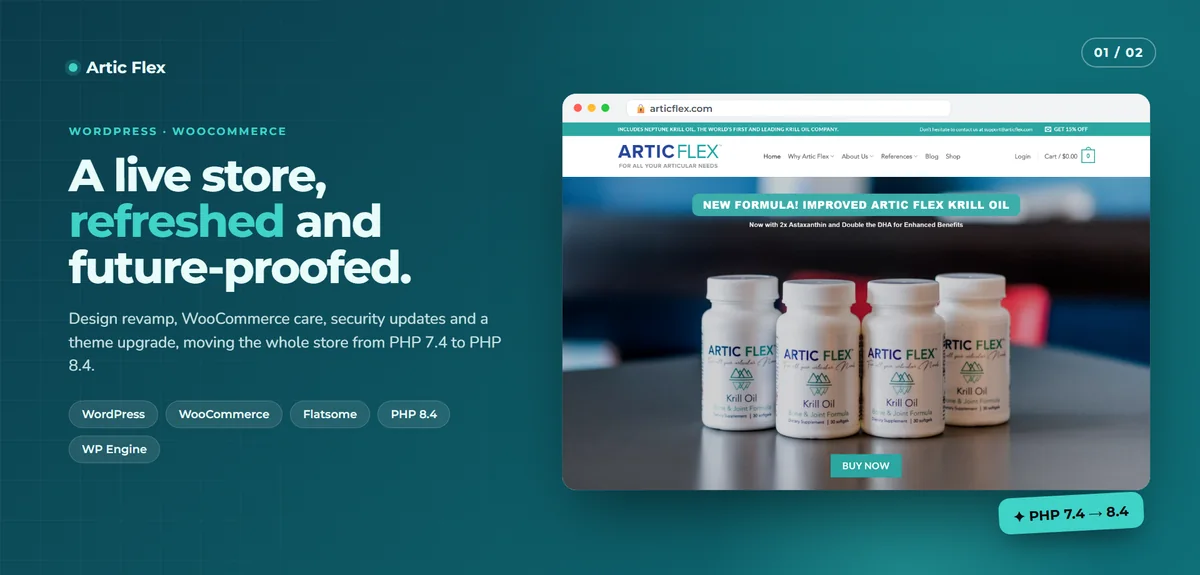
I've worked on a live WooCommerce store with hundreds of pages, including a PHP upgrade from 7.4 to 8.4 where every page was checked afterward, so I know how much care large catalogs need.
Being found by buyers
B2B buyers search for specific things, like "stainless steel fittings supplier Philippines" or "food grade packaging manufacturer Laguna." To show up:
- Each product category and key product has its own page
- Pages include the specifications people search for
- Structured data describes your products and business
- Clean URLs and descriptive titles
- Fast pages, even with many products
Built for export markets too
If you sell abroad, your website is often your first sales meeting. I can build multi-language versions, show certifications that matter internationally and make the inquiry process clear for foreign buyers.
Fast and professional
A B2B site has to look as established as your operation. Clean design, real photos of your facilities and products and fast loading pages tell buyers you're a serious supplier.
Mistakes that cost suppliers inquiries
One huge PDF catalog. Buyers on a phone won't download a 40 MB file to find one product. Searchable product pages are faster for them and visible to search engines.
No specifications online. If a buyer has to message you just to learn a size or material, many will skip to a supplier who lists it.
Quote forms that ask too much. Ten required fields before someone can ask a simple question scares buyers away. Ask for what you need to reply, and collect the rest later.
Slow replies. The website can collect a perfect request, but if it lands in an inbox nobody checks, it's wasted. I can route requests to the right salesperson and send copies to a shared inbox or spreadsheet, so nothing gets missed.
Stock photos of factories that aren't yours. Experienced buyers can tell. Real photos of your warehouse, production line and team build far more confidence, even if they're not perfect.
No clear next step. Every product page should end with an obvious action, whether that's requesting a quote, downloading the spec sheet or talking to sales. Buyers who have to figure out what to do next often do nothing.
How we'd work
- We talk about your products, buyers and sales process.
- We plan the catalog structure and the quote or ordering flow.
- You get a quote with timeline and fixed price.
- I build and share preview links.
- We import products and test search, forms and downloads.
- We launch, and I train your team to manage the catalog.
Let's make your products easy to buy
Tell me about your products and how you sell. I'll reply with a plan and a fixed quote.